
When a customer pushes back on your price, or enquiries feel slow, or someone asks if you can do it a bit cheaper, the temptation is immediate: just lower the price. It feels like the practical solution. It feels like the thing that will move things forward. It usually makes things worse.
Why discounting feels logical but rarely works
The thinking goes: lower price = more accessible = more customers. And in some industries, at some volumes, that logic holds. But home baking businesses do not work that way.
You are not selling a product that can be produced at scale to absorb lower margins. Every order costs you time, ingredients, energy, and skill. If your prices drop, something has to give, and that something is usually you.
There is also a less obvious problem. When you discount, you do not just sell the same thing for less money. You send a signal. You tell the customer that the original price was flexible. That it was, perhaps, a bit high to begin with.
That is a very difficult message to come back from.
What a “yes to everything” price actually costs you
Bakers who consistently lower their prices to secure work often end up in the same place: busy, underpaid, and quietly resentful. The orders are coming in, which looks like success from the outside, but the margin is so thin that growth feels impossible.
They cannot afford to invest in better equipment. They cannot take on help. They cannot raise their prices without feeling like they are starting from scratch, because their customer base has been built entirely around the expectation of low cost.
This is not a pricing problem at that point. It is a structural one. And it started with the decision to discount when things felt uncertain.
What the resistance is usually telling you
When a customer says you are too expensive, or when enquiries do not convert, most bakers assume the price is wrong. Sometimes that is true. But often, something else is going on.
The customer might not understand what is included. They might be comparing you to a supermarket, or to a friend who bakes for fun. They might not have enough information to judge the value. They might simply not be the right customer for what you offer.
None of those problems are solved by lowering your price. They are solved by clearer communication, better positioning, and being honest with yourself about who you are actually trying to attract.
What to do instead
Get clear on your actual costs. A lot of bakers do not know their real numbers. If you are not pricing from a solid base, you are guessing, and guessing usually means undercharging. Start by knowing what every order actually costs you in ingredients, time, and overheads.
Look at your messaging before you look at your prices. If enquiries are not converting, the problem might not be the number. It might be that potential customers cannot see why you are worth it. What does your pricing page say? What does your Instagram say? Are you making the value clear, or are you just listing prices with nothing around them?
Be specific about who you are for. A baker who tries to appeal to everyone, from budget orders to luxury commissions, often ends up attracting no one particularly well. When you get clear on who your ideal customer is and speak directly to them, price objections reduce. Not because you have lowered the price, but because the right people are finding you.
Hold the line on boundaries. There is a version of “what to do instead” that is simply: do not discount. Say the price. Let people decide. Not every enquiry is meant to become a booking, and that is fine. A customer who would only book if you dropped your price is often not the customer you want.
The shift worth making
Lowering your prices is the easy option in the moment. It feels like action. But it does not build a sustainable business, and it does not solve the underlying issue.
What does build a sustainable business is understanding your numbers, getting your messaging right, and having enough confidence in what you offer to let the price stand.
That is harder. It takes more thought than just adjusting a number. But it is the work that actually moves things forward.
The Bigger Picture
Want help building a baking business that works around your real life?
The HBB Academy covers the practical side of running a sustainable home baking business, including not only how to calculate pricing, but also deal with the mindset shift needed to price confidently.
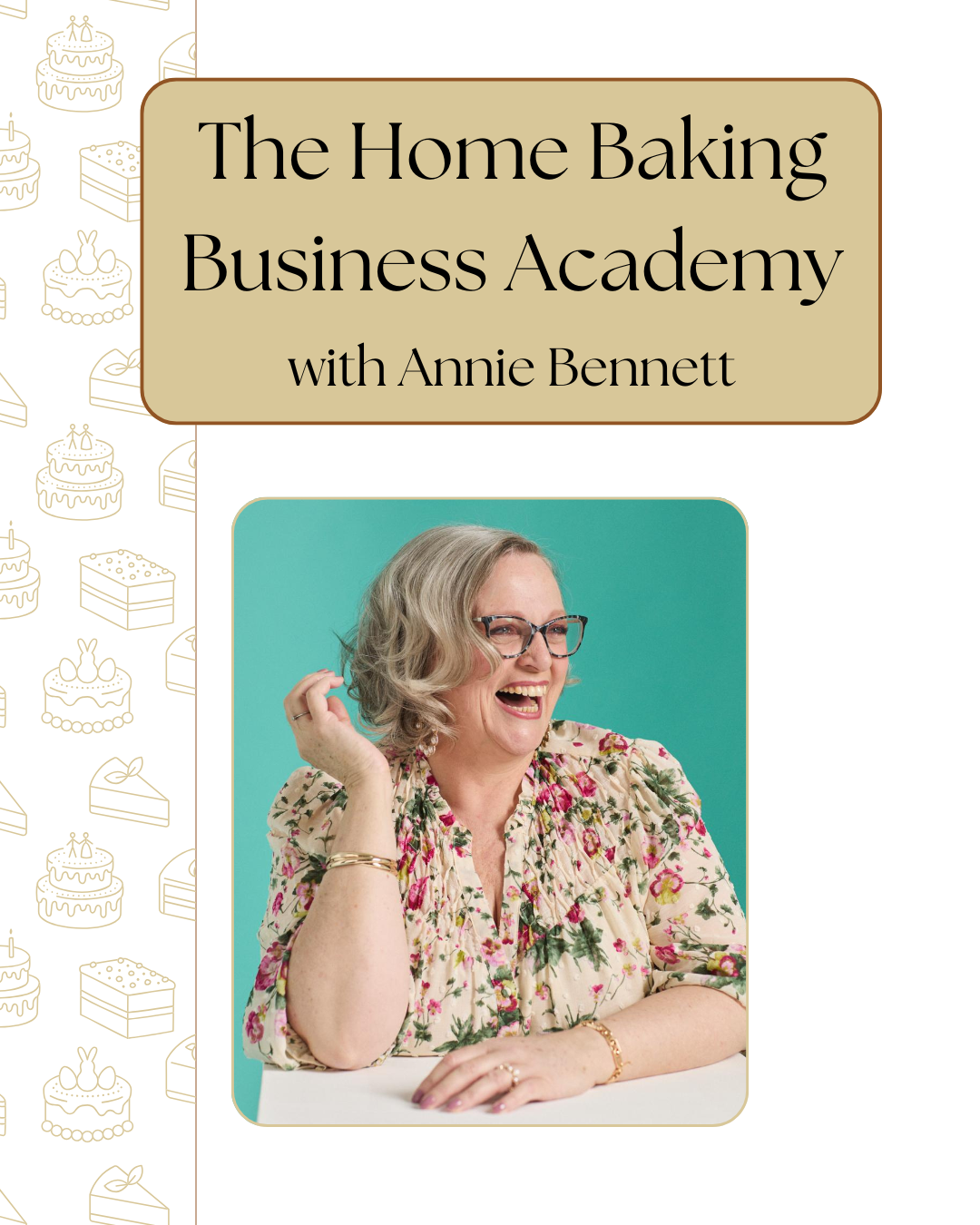

Annie ran her baking business, Leading Lady Cakes, for 10 years, following a career in primary teaching. She is now combining her teaching experience and her passion for baking to teach and support others who wish to set up for themselves.
She was a finalist in D’Licious Magazine’s Business Coach of The Year Award 2025
Find out more about the Home Baking Business Academy here;
